Infants in Montessori: Is it really different from traditional daycare?
They eat, they sleep, they get their diapers changed, and then they do it all over again. From the outside, that can look like the whole of an infant’s day.
So it’s a fair question for a parent to ask: if that’s all a baby does, how could a school’s philosophy possibly make a difference? Isn’t infant care just infant care?
The short answer is no. The first year of life is when the brain is growing faster than it ever will again, and a baby is learning constantly, whether or not anyone has planned for it. A Montessori infant classroom is built around that fact. Here is what that looks like in practice, and how it compares with a traditional daycare room.
How Montessori Sees the Infant
“The most important period of life is not the age of university studies, but the first one, the period from birth to the age of six.” — Dr. Maria Montessori, The Absorbent Mind
Montessori did not treat infancy as a waiting room for “real” learning to begin later. She saw the infant as a capable person who is absorbing language, movement, and relationships from the very first days, and who deserves respect, freedom of movement, and a thoughtfully prepared world to explore.
That view changes everything about how a classroom is set up, what goes in it, and how the adults behave. Those are the three differences parents notice first.

The Prepared Environment
Walk into a traditional daycare infant room and you will often see bouncers, swings, activity centers, and cribs lining the walls. These are designed to keep babies safe and contained while adults attend to feeding and changing.
A Montessori infant room, often called a Nido (Italian for “nest”), is designed with calm and peace at the forefront. The space is uncluttered, the colors are soft, and almost everything sits at the baby’s level. Instead of equipment that holds a baby in place, you will find:
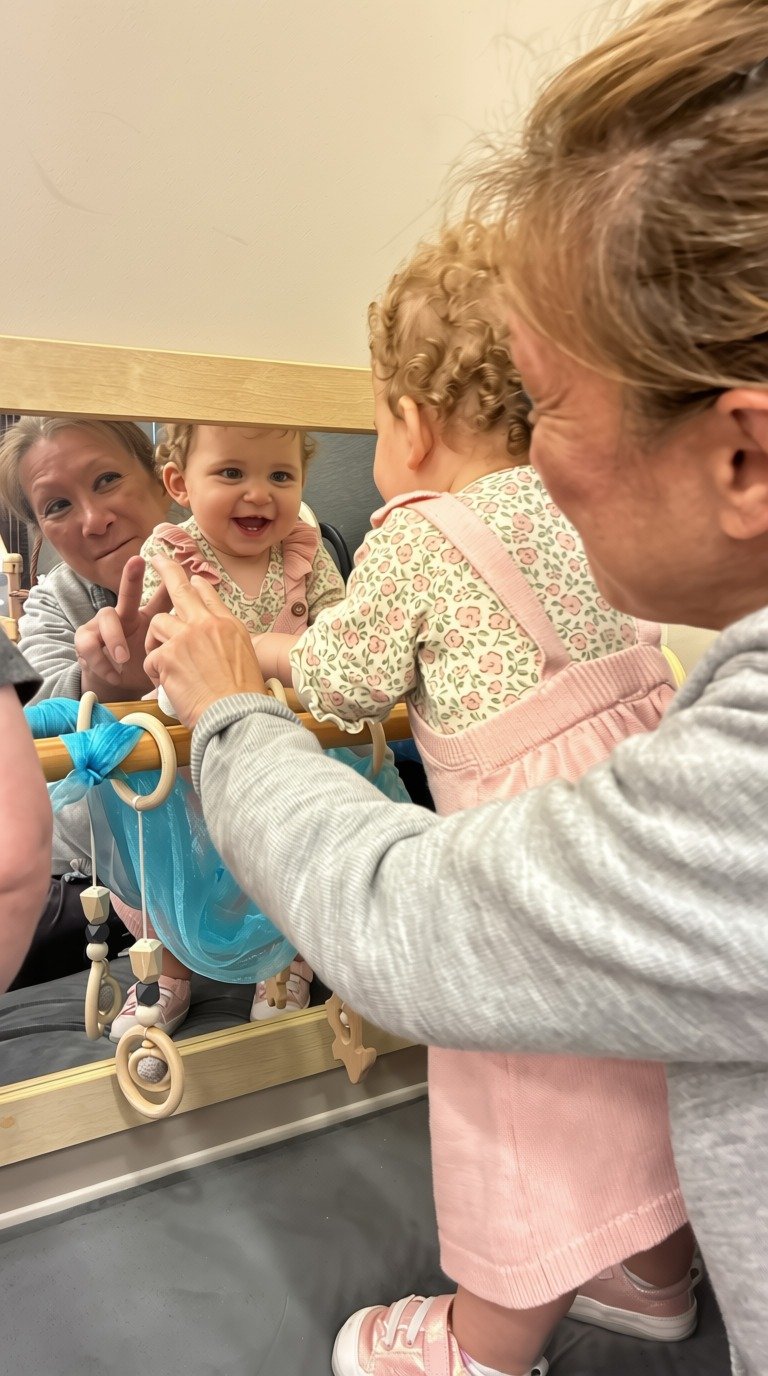
• Floor mats and low mirrors so infants can move freely, see themselves, and build core strength on their own timeline.
• Low shelves with a small number of materials the baby can reach and choose independently.
• Infant-sized tables and chairs that give older babies a real place to sit and eat, building autonomy and control over their bodies from the earliest age.
The goal is a room that says, “You are free to explore here,” rather than, “Stay put until someone comes for you.”
The Materials
Toys in a typical infant room tend to light up, play music, or do something when a button is pressed. They entertain, but the toy is doing the work.
Montessori infant materials are quieter and simpler on purpose. Each one is chosen to target a specific skill that is developing at this age, and each one asks the baby to do the work. A few you will see in an MKU Nido classroom:
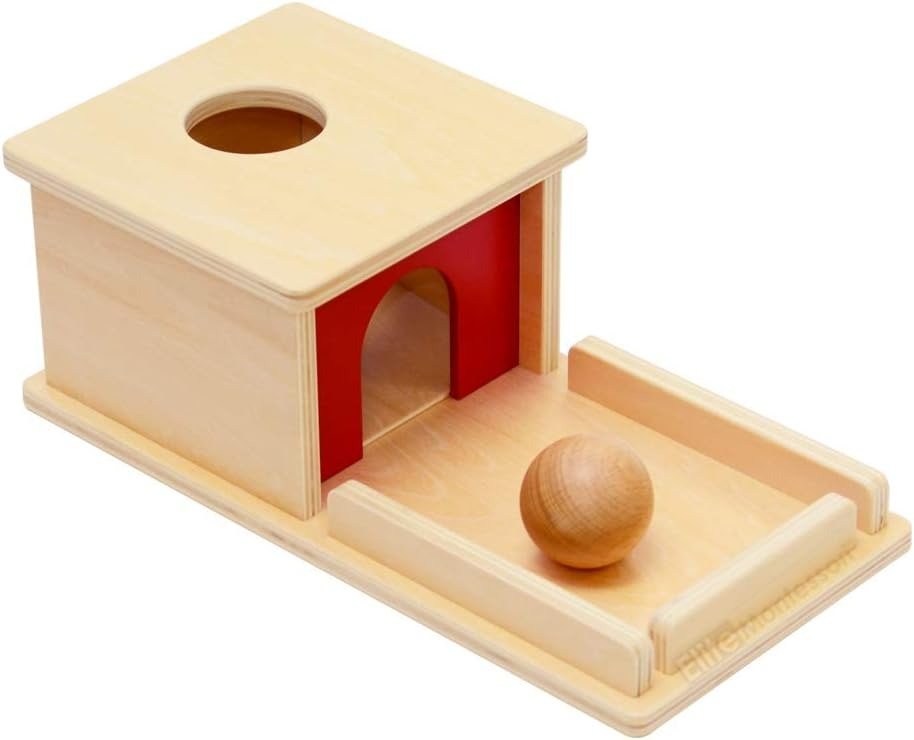
• The Object Permanence Box. A wooden ball drops into a hole and rolls back out a tray. The baby learns that something out of sight still exists, which is the same understanding that eventually makes goodbyes at drop-off easier.
• The Egg and Cup. A wooden egg fits into a matching cup. It builds the whole-hand (palmar) grasp and hand-eye coordination that later becomes holding a spoon and, eventually, a pencil.
• Grasping beads, rattles, and rings. Made of natural materials with varied textures and weights, so the baby is learning through real sensory feedback rather than plastic that all feels the same.
• Mobiles and visual materials. Introduced in a deliberate sequence that follows how infant vision develops, from high-contrast black and white to color and movement.
Because the materials are limited and rotated, babies engage with them longer and more deeply. That early practice at concentrating is one of the most valuable things a Montessori infant program offers.
The Teachers
This is the difference that is hardest to see on a tour and easiest to feel over time.
Montessori infant teachers, called guides, are trained differently. Beyond the state-required credentials every childcare worker holds, they are trained to observe. A guide watches how an infant reaches, rolls, mouths an object, or tracks a sound, and uses those observations to decide what to offer next. The right material appears at the right moment because someone was paying attention.
They also see the child differently. In a Montessori room you will hear guides speak to infants in full sentences, tell a child what is about to happen before picking them up, and slow down during care routines like diapering and feeding rather than rushing through them. These moments are not interruptions to the learning. In an infant classroom, they are the learning.
And none of this replaces warmth. Love and responsive care come first, always. The training simply gives teachers a framework for delivering that care in a way that respects the infant as a person who is already learning.
Why It Matters Beyond the First Year
Infants in a Montessori infant program are not being pushed to learn early. They are being given the freedom, the materials, and the attention to do what they were already going to do, just with less frustration and more confidence.
The results show up later: toddlers who feed themselves, preschoolers who can concentrate on a task, and children who trust that the adults around them will listen. Executive-function skills like attention and impulse control, which we wrote about last month, have their roots in exactly these first months.
See a Nido Classroom for Yourself
The best way to understand the difference is to stand in the room. Schedule a tour at your nearest Montessori Kids Universe, meet our infant guides, and watch what a “just eating and sleeping” day really looks like.