Screen Time in the Montessori Classroom:
The world is increasingly digital, and discussions around children’s screen time (what it is, how much is too much, and how to manage it) have been circulating in early childhood education for years.. For educators teaching the Montessori method, these questions are particularly salient. Given the pervasive push for screens in education, how does the enduring, tactile method of a Montessori classroom offer a counterbalance?
Screen Time in the Montessori Classroom:
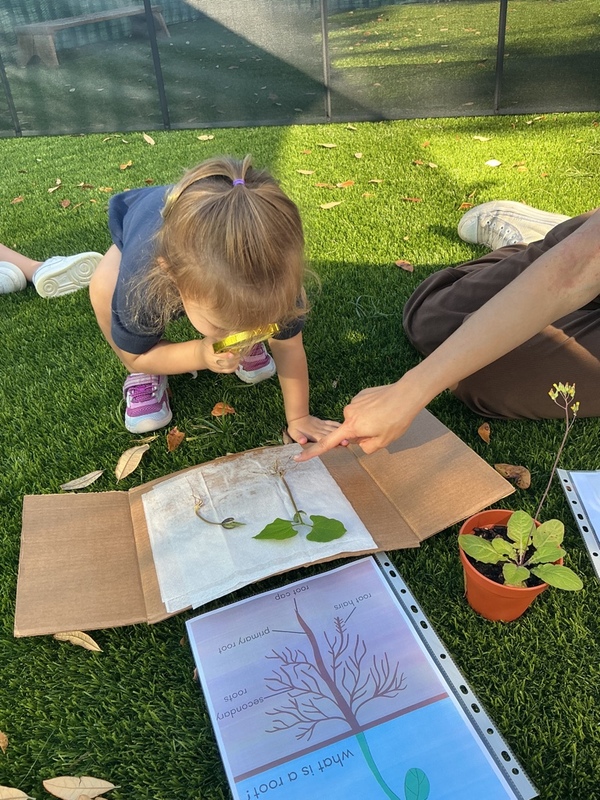
At its heart, the Montessori method champions hands on, real world exploration. Dr. Maria Montessori observed that children from birth to age six are in the period of the “absorbent mind,” learning best through direct manipulation of their environment. The prepared environment is deliberately full of beautiful, tactile materials that engage all senses and develop concentration, coordination, and independence.
In this context, technology, especially passive screen time, does not apply to the Montessori principles.
Montessori Prioritizes the Concrete:
Sensorial Experience: Montessori materials offer texture, weight, taste, sound, and smell, qualities that a flat, two-dimensional screen cannot replicate. Physically trying to tie a shoe is fundamentally different from watching a video on how to tie a shoe.
Developing Fine Motor Skills: Activities like pouring water, buttoning, sewing, and materials like the Knobbed Cylinders and Metal Insets strengthen the hand muscles which is an essential precursor to writing. Screen use, typically limited to swiping or tapping, utilizes a very narrow set of motor skills.
Concentration and Deep Work: The self-correcting nature of Montessori materials encourages focused, sustained attention. Digital content, often fast-paced and interruptive, can foster a habit of short attention span and less patience overall.
Social Interaction: The classroom encourages peer observation, collaboration, and grace and courtesy. Screens can be isolating, replacing necessary face-to-face interaction and emotional development, often seeing playing a game with a bot or stranger as “connection.”
Some Takeaways for Parents:
Prioritize Interaction over Consumption: When screens are used, encourage interactive content (like video creation or coding games) over passive viewing.
Establish “Screen-Free” Zones and Times: Protect mealtimes, bedrooms, and family conversation time from digital interruption.
Be a Model: Children absorb behavior. Limit your own distracted screen use, especially when engaging with your child.
Connect Digital Learning to Real Life: If a child watches a video about birds, follow it up with a nature walk to observe real birds.
Ultimately, the Montessori classroom’s approach to screen time is waiting to use it until students are in elementary school at the earliest, and even then, utilizing it as a tool with follow up connected to it. MKU stands firm in protecting the critical years of development for real, concrete learning while students are at school!